

A home’s location is felt most clearly on the days when time matters. A short journey to a medical appointment, an easier visit to an ageing parent, or the reassurance of nearby care can shape daily life far more than a view from the balcony. For buyers considering property near hospitals Kota Kinabalu, the appeal is not simply proximity. It is the ability to live in a well-connected part of the city without compromising on privacy, quality or the rhythm of modern urban living.
Kota Kinabalu’s healthcare network serves residents across Sabah, making hospital access a meaningful consideration for families, professionals and investors alike. Yet buying near a hospital is not a one-size-fits-all decision. The right property balances practical access with road connectivity, neighbourhood character, building quality and the lifestyle surrounding the front door.
Why property near hospitals in Kota Kinabalu attracts buyers
Healthcare access has become a lasting location advantage rather than a niche preference. Young families value the convenience of being within an efficient drive of paediatric, specialist and emergency services. Established households may be supporting parents or managing regular appointments. Medical professionals, meanwhile, often look for homes that reduce commute time while still offering a refined place to switch off after work.
For these buyers, a hospital-adjacent address can remove friction from the week. It makes routine consultations less disruptive and provides valuable reassurance when an unexpected situation arises. In a city where peak-hour traffic and weather can affect travel times, being close to major routes and healthcare facilities offers a practical form of everyday security.
The appeal also extends to tenants. Doctors, visiting consultants, healthcare administrators, corporate staff and relocating families often prioritise established, connected districts. A thoughtfully designed residence near medical facilities can therefore benefit from a wider tenant pool than an isolated development, particularly when it is also close to workplaces, schools, dining and the city centre.
Proximity is useful, but connectivity matters more
“Near” should never be assessed by looking at a map alone. A property may appear close to a hospital yet involve an awkward route, congested junctions or limited access during busy periods. Conversely, a home located a little further away may offer a more predictable journey because it connects directly to key arterial roads.
When viewing a property, test the journey at the times you are most likely to use it. Consider the morning commute, school-run hours, evening traffic and rainy-day conditions. Look at more than one route. This gives a clearer picture of whether the location will genuinely save time when it counts.
It is also worth distinguishing between being conveniently connected and being immediately beside a hospital. Direct adjacency can bring practical trade-offs, including ambulance noise, heavier traffic, visitor parking pressure and a more commercial streetscape. Many buyers find that a short, efficient drive from a quieter mixed-use address is the more sophisticated choice.
The advantage of Luyang’s central position
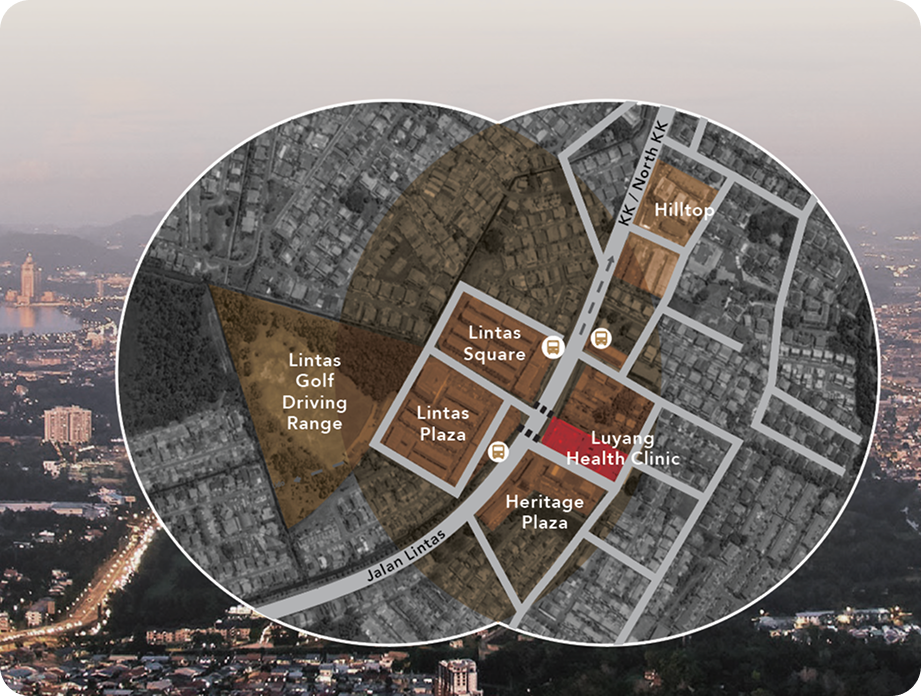
Luyang is particularly compelling because it sits within an established urban catchment rather than on the city’s outer edge. Its position supports access to healthcare, schools, business districts, retail destinations, Kota Kinabalu International Airport and the wider city. That versatility matters to buyers whose lives do not revolve around a single daily journey.
A central address also creates a more resilient ownership proposition. Rather than relying on one attraction, it is supported by several enduring demand drivers: employment, education, healthcare, hospitality and lifestyle amenities. This can be especially attractive to investors seeking a property with relevance across different tenant profiles and changing stages of life.
What to assess before buying
A property near a hospital should still stand on its own merits. The convenience of the address cannot compensate for poor planning, limited facilities or a building that does not suit the way you live. Start by considering how the home functions on an ordinary weekday, not only how it looks during a viewing.
For owner-occupiers, space planning is often central. A well-proportioned residence with a practical kitchen, comfortable living area, useful storage and flexible rooms can remain suitable as a household changes. High-rise living also places greater emphasis on lift capacity, arrival areas, security, parcel handling and car parking. These are details that affect comfort every day.
For investors, study the likely renter rather than relying solely on headline demand. A compact executive suite may suit a travelling professional or a couple working in the city. A larger two-bedroom home may be more appropriate for a small family, a senior household or professionals sharing accommodation. The strongest rental proposition is one where the unit format, furnishing level and location all speak to a clear audience.
The following considerations deserve careful attention:
- Journey quality: Assess road access, not just straight-line distance to hospitals, workplaces and schools.
- Noise and privacy: Visit during weekday hours and evenings to understand traffic, nearby activity and the outlook from the unit.
- Parking provision: Confirm the number of bays, visitor arrangements and the ease of entering and leaving the development.
- Daily amenities: Look for dining, groceries, services and green or social spaces that reduce unnecessary journeys.
- Management standards: Examine security, maintenance plans, common-area quality and the long-term upkeep of facilities.
An integrated setting changes the daily equation
Standalone residential towers can offer a comfortable home, but they often leave residents travelling elsewhere for work meetings, coffee, dinner, guest accommodation or everyday errands. A mixed-use destination offers a different proposition: more of life can happen within the same connected environment.
This is where a development’s composition becomes commercially and personally significant. Residences supported by premium offices, lifestyle retail, dining and hotel accommodation create activity throughout the day. For professionals, it can mean meeting clients close to the office and returning home without crossing the city. For residents, it brings practical choice without making the neighbourhood feel purely transactional.
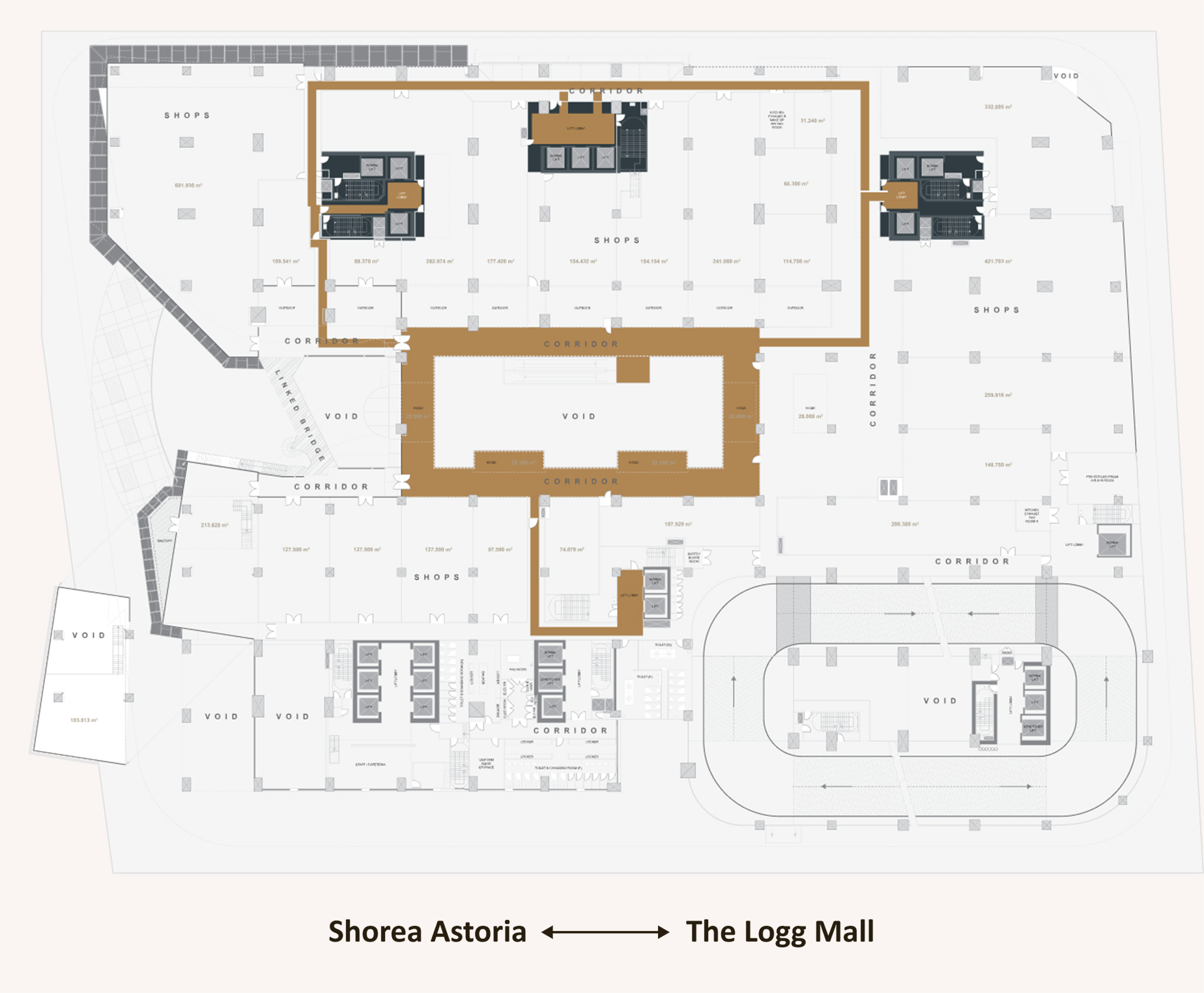
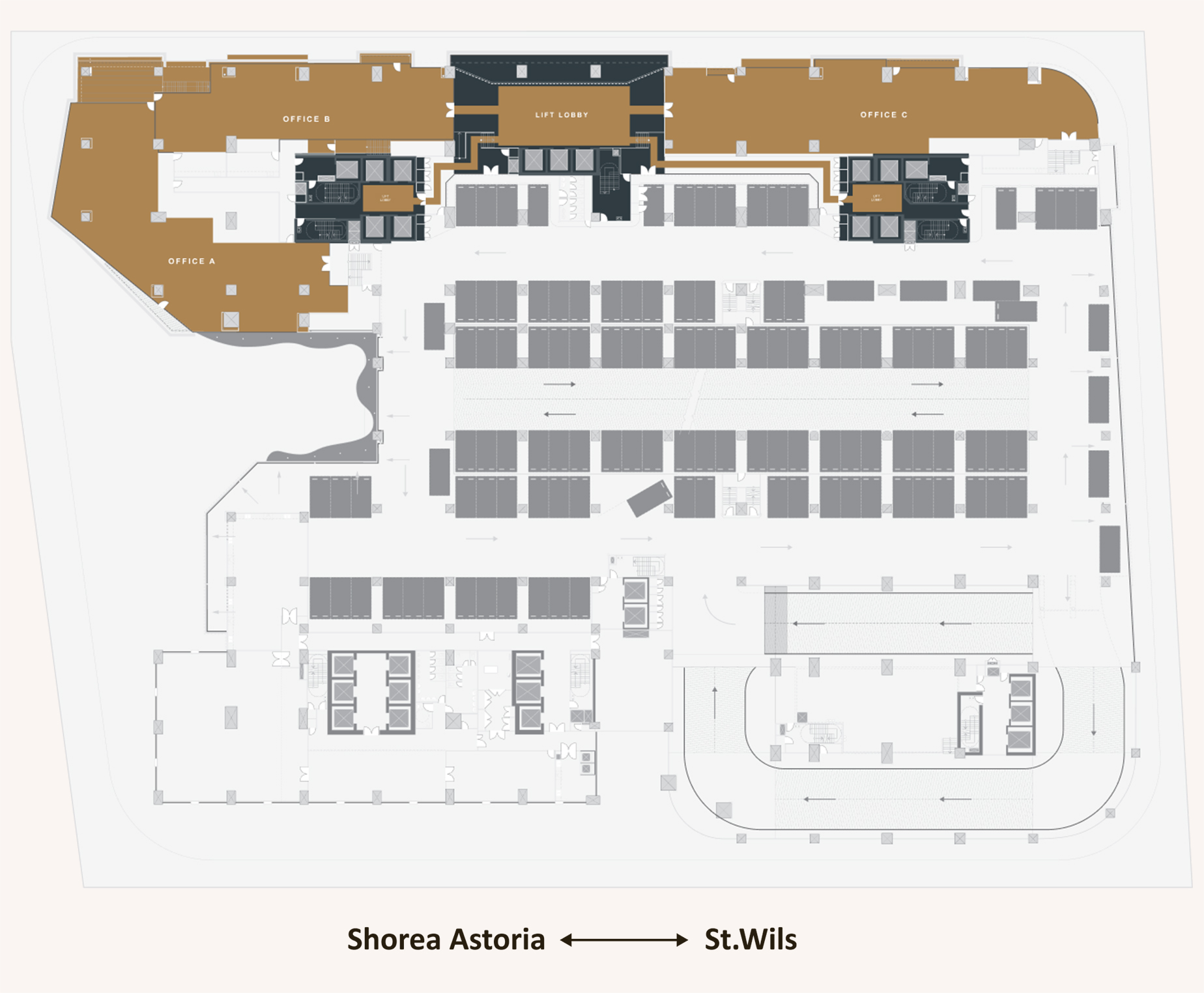
At The Logg in Luyang, this integrated approach combines residences, executive suites, premium workspaces, retail and dining, substantial parking and the four-star Avani Hotel within one urban destination. Parkhill’s 39-storey residential tower offers 250 homes ranging from 620 to 850 sq ft, providing a scale and format that suit buyers seeking a connected address with a more elevated residential experience.
The value is not simply that amenities exist nearby. It is that the development has been planned to bring work, hospitality, leisure and residential life into closer reach. For a buyer evaluating healthcare access, this can be an important distinction. A convenient hospital journey becomes part of a broader lifestyle where essential services, professional commitments and downtime are all more efficiently arranged.
How hospital access supports long-term value
No location feature guarantees capital appreciation or rental performance. Market conditions, unit supply, pricing, financing, management quality and the wider economy all play a role. Still, homes in established, well-served areas tend to retain a clear practical story, which matters when owners later choose to rent or sell.
Healthcare is one of the city functions that cannot easily be replaced or moved to a digital platform. While appointments may increasingly begin online, treatment, diagnostics, specialist consultations and family support remain location-sensitive. This gives nearby residential districts an underlying relevance that can endure beyond short-term property trends.
For investors, the most prudent approach is to avoid treating hospital proximity as the only demand driver. Instead, look for a location with several reasons to be chosen: proximity to medical facilities, access to employment, an appealing urban environment and a residence that meets contemporary expectations for security, comfort and convenience. A property with multiple strengths is better placed to appeal to a broader market.
For families, the calculation is more personal. The best home should make daily routines easier while preserving the sense of sanctuary expected from a premium residence. Convenient access to care is valuable, but so are a well-managed environment, thoughtful facilities, room to grow and a neighbourhood that feels connected to the city’s future.
A considered purchase begins with the journeys you make now and the ones you may need to make later. Choose an address that respects both: close enough to the services that matter, connected enough for the life you want, and refined enough to remain a place you are pleased to come home to.